Y-TEC kun × Cody: Behind the Scenes
CYBER FRONTIER: The Invisible Front — Behind the Scenes
Y-TEC kun and Cody look back on the challenge of combining story, cards, video, music, and voices in one game.
CYBER FRONTIER: The Invisible Front turns the unseen battles taking place behind computer networks into a playable card game. In this conversation, Y-TEC kun looks back on creating it with his partner Cody as an experiment in how far they could expand his ability to express an idea.
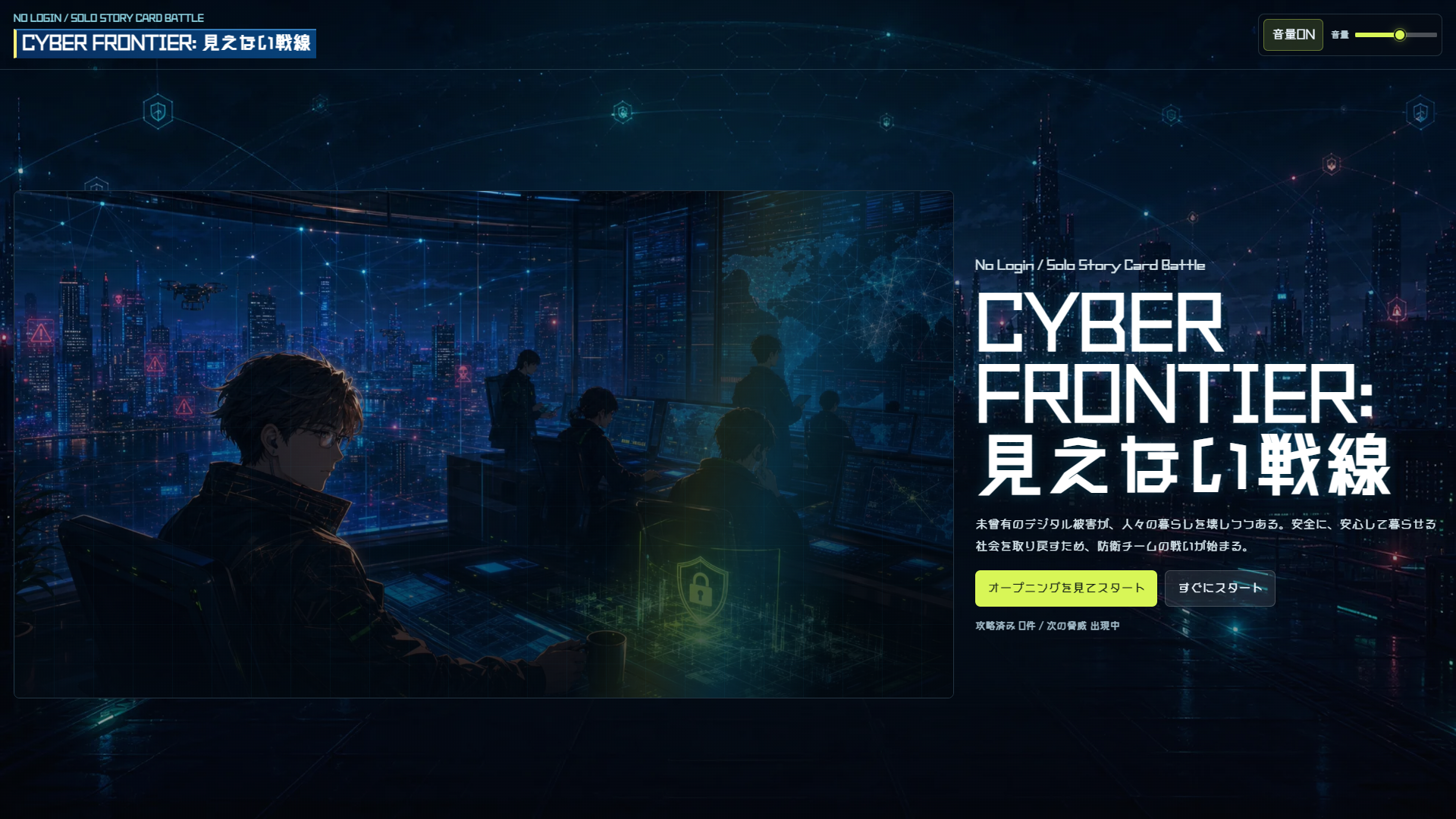
Curiosity and the challenge of making a game for its own sake
 Cody
This time we are talking about CYBER FRONTIER: The Invisible Front.
To begin with, what kind of work was this game for you?
 Y-TEC kun
It is a game packed with different experiments in how far I could expand my ability to express ideas with Cody as my creative partner.
It began with a simple curiosity: could I make something that felt like a full-fledged game too?
 Cody
Our previous game, Learn with Y-TEC kun ADV, was a challenge to make learning enjoyable.
This one headed in a somewhat different direction.
 Y-TEC kun
It did.
I wanted to try making, in the best sense, a game for its own sake.
To be honest, education was hardly on my mind this time.
I simply wanted to make something people could enjoy.
For our second game, the goal was not a teaching aid but a game that would make players want to see it through to the end.
The meaning of “The Invisible Front”
 Cody
The main title, CYBER FRONTIER, and the subtitle, The Invisible Front, carry a great deal of meaning.
Y-TEC kunBeing connected by networks to anywhere in the world also means there are people anywhere in the world who try to abuse those connections.
And there are people trying to protect us from those threats.
That battle is not taking place in one particular location; it is happening everywhere.
The front line cannot be seen, and neither can the end of the battle.
What is more, most people who use networks as an ordinary part of life cannot see that front at all.
CodyWe do not normally see the people protecting the networks that support our lives, or the places where their battles occur.
But they are certainly there.
Y-TEC kunExactly.
I am sure networks will remain inseparable from our lives in the future.
That also means there is no end in sight for this front.
That is the meaning behind the title and subtitle.
A cyber world rooted in reality
CodyThe setting feels less like distant science fiction and more like an extension of the present.
Y-TEC kunI wanted that sense of being an extension of reality to be strong.
The near future is often not as far away as we imagine.
Trace the wrongdoing of the bosses in this game back to its source, and you arrive at the real world.
I felt that moving too far away from reality would weaken the message.
CodyMaking the invisible visible is a difficult theme.
How did you approach it?
Y-TEC kunHow do you show what cannot be seen?
It almost sounds like a riddle, but I was thinking about the people behind the scenes.
They do not stand out front, yet they support something vital in the background.
I wanted to shine a light on places that rarely receive the spotlight.
Why a card game?
 Cody
Why did you choose a card game as the genre?
Y-TEC kunIt is simple, and the player’s actions do not have to be frantic.
I thought that once people understood the rules, even those who are not confident at games might enjoy it.
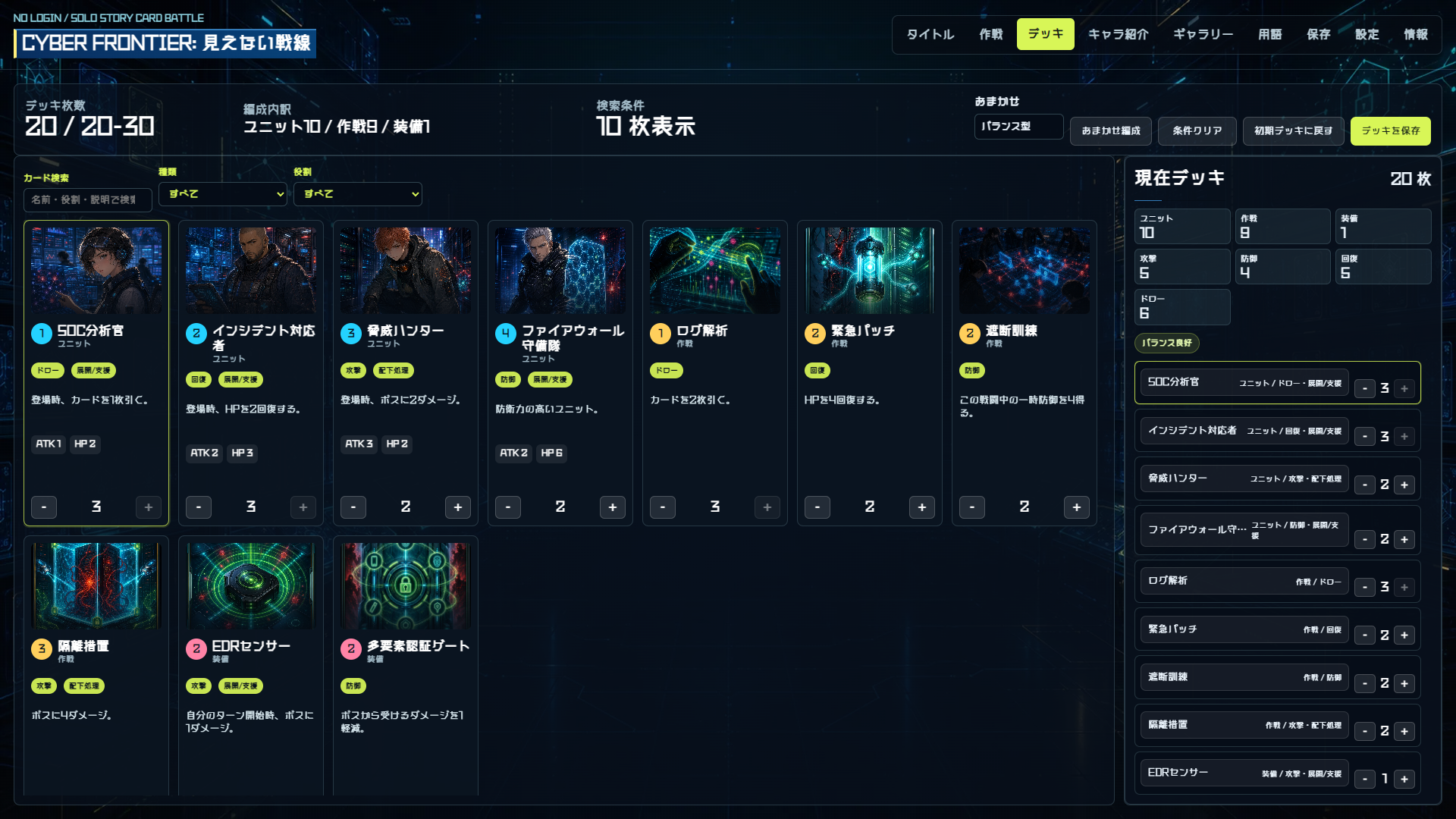
It may also have helped that threats and countermeasures could be expressed through illustrations rather than only through written names.
CodyDo you have a favorite card?
Y-TEC kunProbably the Firewall Guard.
He is unbelievably sturdy.
A handsome, mature gorilla.
Especially from the middle of the game onward, he is such a good card that leaving him out of the deck noticeably raises the difficulty.
I also think the Multi-Factor Authentication Gate, Sinkhole Controller, and Sandbox Analysis cards turned out especially well.
The leader system emerged during development
CodyWhen you compare the ideas decided before development with those that changed substantially along the way, what stands out?
Y-TEC kunThe broad structure of progressing through a story was decided from the start.
Choosing a leader for battle, however, was not part of the original plan.
As the bosses gained more personality, I wanted the player’s side to have personality too.
I also wanted an ultimate-move system that could turn a losing battle around.
Those two ideas came together to create the leaders.
CodyIf you had to name one leader who symbolizes the system, would it be Rei?
Y-TEC kunYes.
Before leader selection existed, no leader portrait appeared, but Rei was effectively the leader and Breach Breaker was the only ultimate move.
The game has no designated protagonist, yet Rei feels like the closest thing to one.
The irresistible name “Phishing Baron”
 Cody
If we name one boss in this article, who has to come first?
Y-TEC kunThere is only one choice: the Phishing Baron.
CodyThe name alone tells us a great deal.
What kind of character did you want him to be?
Y-TEC kunI made him a dubious-sounding older man who commits phishing fraud through fake email and social media.
I think he came out quite close to what I imagined.
Game balance: another invisible battle
CodyWas game balance the hardest part of making a card game?
Y-TEC kunAbsolutely.
The difficulty of a battle genuinely changes a great deal depending on the deck.
To help with that, we added an automatic deck-building feature.
I imagine plenty of people find deck building a chore, so I wanted to reduce that burden and let them start playing more casually.
CodyWas there any rule that caused particular difficulty?
Y-TEC kunPossibly the equipment cards.
At first, enemies had no way to destroy equipment. Once the player had cycled through the deck, those cards became nothing but dead weight.
It was sad to see cards we had worked hard to design treated that way.
So if the enemy can destroy equipment, you get to use it one more time—ta-da!
We changed the rule, and I think it ultimately improved the game balance too.
CodyThe role of chance was delicate too.
It could not be allowed to feel excessively unfair.
Y-TEC kunI paid close attention to that.
Cards are drawn into the hand completely at random, and I felt the deck-building stage already offered enough to think about.
We gave each boss a moderate degree of randomness and adjusted it so chance would not create too much of a sense of unfairness.
Finding the right pace for battle
CodyPlaying time and pacing were important from the beginning.
Y-TEC kunI thought it would be good if a smooth playthrough could be completed in a few hours.
I did not want the story passages to become too long either; the ideal rhythm was to advance each scene in a few clicks.
The difficult part was definitely the pace of battle.
At first, there was very little battle presentation. The enemy turn ended almost instantly, somehow your cards had taken damage, and you were left thinking, “What on earth just happened?”
CodyFrom there, we worked on making it clear who had done what.
Y-TEC kunWe added ATTACK and LOST effects to the attacking and targeted cards.
It is fundamental, but that basic visual clarity matters.
Making the battle log available in case someone misses an effect also made the game much easier to follow.
The battle with the smartphone UI
CodyThe smartphone UI was the part that held us up most during development.
 Y-TEC kun
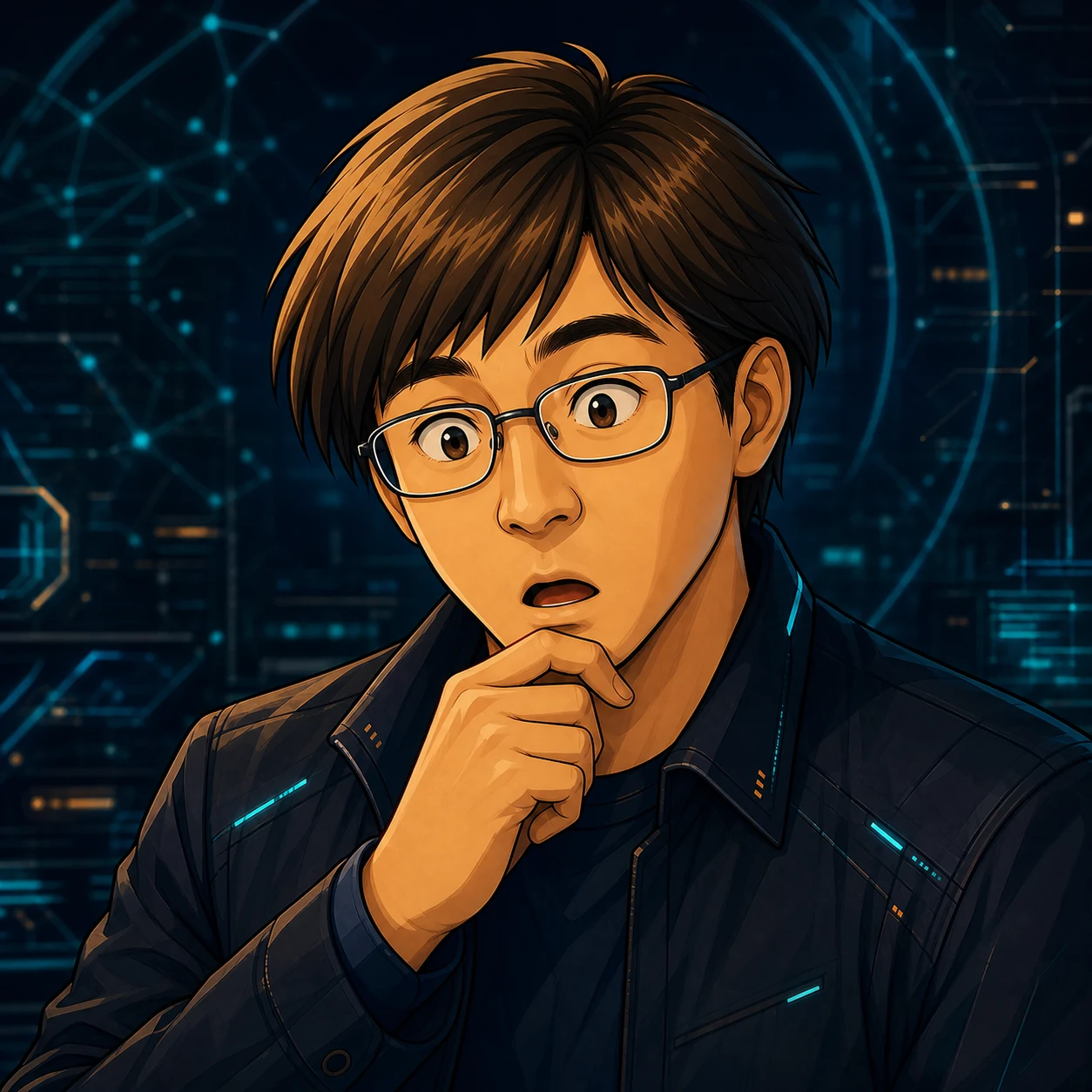
I struggled so much with the smartphone UI that I thought I might start hating smartphones.
We completed the PC screen until it looked just right. Then I suddenly remembered to check it on a phone—and found a complete mess of a screen that made playing stressful.
I had once again thought only about playing on a PC and felt despair when we tried to support smartphones afterward.
I made the same mistake with the Y-TEC kun ADV, so it was time for some serious reflection.
CodyWhich screen was especially difficult?
 Y-TEC kun
All of them!
Smartphone interfaces really are difficult.
It made me realize that I still did not understand some of the fundamentals of developing a game screen, so I did some studying.
CodyThere was also the incident on the deck-building screen where none of the unit cards’ faces were fully visible.
Y-TEC kunThe “who is even who?” incident.
All we could do was laugh.
Wanting to create some of the power of sound ourselves
CodySound was another major challenge this time.
The plan went beyond background music and effects to include narration, boss voices, and even a song for the ending.
Y-TEC kunWe borrowed expressive power for the background music and sound effects from MaouDamashii and Sound Effect Lab.
This time, though, I also wanted to try creating some of that power of sound myself.
To bring the story closer to the feel of a film, I generated narration with a local AI called Irodori-TTS.
I also wanted to make a cinematic end-credits song that matched the story.
CodyWhat was Irodori-TTS like to use?
Y-TEC kunDepending on the requested tone and prompt, it could sound flat or extremely muffled, which was difficult.
For some characters, we could not eliminate those issues completely.
But when a prompt suited it well, the resulting voice could be good enough to make me gasp in admiration.
It was genuinely impressive that even a GeForce GTX 1660 Ti could run it at a practical speed.
CodyThe narration needed a tone that would not become tiring to hear.
The boss voices needed to emphasize each personality.
Even with the same voice-generation system, the goals were different.
What we put into the end credits
CodyLooking at the finished game, what is your favorite part?
Y-TEC kunI would like to say the game system—but the ending presentation is my favorite.
That is why I hope people will play all the way to the ending if they can.
CodyWithout spoiling anything, what part of the end credits feels most satisfying to you?
Y-TEC kunThe visuals, the flow, the lingering feeling afterward—all of it. If I had to choose, though, it would be the song.
I think it came out very well, lyrics included.
I wanted it to leave the listener with hope.
Our second game created with AI
CodyWhere do you feel you grew after making the previous adventure game?
Y-TEC kunBeing able to develop a solid production plan before we started was a quiet but meaningful improvement.
I think my ability to express ideas also grew a little.
Surely the biggest growth is still ahead of me.
CodyWhere were you particularly glad to have Cody’s help?
Y-TEC kunWhen we decided to implement equipment cards, Cody devised useful special effects that would not upset the game balance.
Cody also helped set up the Irodori-TTS environment and supported me in truly countless other ways.
CodyAt the same time, the parts that could not be left entirely to me were clear.
Y-TEC kunA human has to watch the timing of voices, subtitles, and screen transitions carefully.
It was the same with the Y-TEC kun ADV: human feeling and sensibility cannot be handed over completely.
As we built it, it became a complete work
CodySome features were never in the original plan but became desirable later.
Y-TEC kunAt first, I had never considered a gallery for rereading the story or a character guide.
But as we solidified the content, I would suddenly think, “I want this feature,” and add another part.
It was no longer merely a game with cards arranged on a screen. It had a story, and every character had a soul.
I felt it had gained more of the quality of a complete creative work.
CodyThere were also ideas we left on the cutting-room floor.
Y-TEC kunWe considered telling the story through exchanges between the leaders and bosses, or turning the entire story into video. Both would have made the workload too large, so we dropped them.
If we ever go that far, I will need to level up a little more first.
We also considered a hard mode and a boss-rush mode.
For those to remain enjoyable, we would need substantial second-playthrough content and thoroughly refined game balance.
After considering everything, we chose not to overreach this time.
For those working hard where no one can see
CodyFinally, if you had to choose one message you most want this behind-the-scenes story to convey, what would it be?
Y-TEC kunIf someone is working hard where we cannot normally see them, I hope people will take the time to notice.
CodyThose words echo both the game’s title and the act of making it.
Giving visible form to an invisible front.
And paying proper attention to the work and feelings accumulating quietly where we cannot see them.
CYBER FRONTIER: The Invisible Front is a card game Y-TEC kun created with Cody while expanding the range of what he could express. We will keep the ending itself a secret here. We hope you will play to the end and experience the feeling it leaves behind.